


I had tried everything else before I did it. I’m saying this first because I believe it’s key to the rest of my story. If you’re going to understand, or maybe even pity me, then you need to understand that what I did wasn’t my first option, and it wasn’t a choice I made from a place of comfort.
For eight months, me and Segun and Bright and Nnamdi were in the cybercafé every day and every night we huddled together in my one-bedroom apartment, working our minds and fingers off. What didn’t we do? We ran the schemes, we sent the mails, we created the dating profiles, and we bought the social media logins, trying our best to understand and exploit the greed of different white men.
You can judge us all you want, but this was the only hustle we knew, and even though we did it with all of our might. It was month after month of wasted effort and close wins that never materialised, and the journey that we started with so many dreams and enthusiasm quickly became weary and frustrating.
Nnamdi quit first, then Bright; then it was just me and Segun left, the both of us too desperate to win and too stubborn to try anything else. When Segun disappeared for a while, I thought he had also given up on trying to make it big; then he came back, and he was a completely different guy. He was suddenly rich now. Somehow, he had figured it out without the rest of us, and I was in shock.
He took me to his apartment in Lekki, and I couldn’t help but stare in awe at the massive duplex and the expensive cars parked in his compound. When I started to ask him questions about how he had done it, he laughed and poured me a drink. Was it a new update? Did he change his hustle format? Did he find a mentor to work under? I was completely puzzled.
Part of me even felt betrayed that he had achieved all this without me after we had spent more than a year trying to figure it out. I felt like I was in one of those Afrobeat songs that talked being backstabbed by your “brothers” when they finally made it.
“You’re a real hustler, my bro,” was what Segun said to me. “You just need a little help and a lot more luck.” I nodded in silence, suddenly getting an uneasy feeling.
I would have politely turned down his request for him to “show me how to get to the next level”, but I didn’t even have enough money to pay my transport fare back home. And since I didn’t want to face the shame of having to ask him to drop me off, I agreed to go with him.
The native doctor’s compound was nothing special. It was just another mud building in the middle of nowhere, surrounded by different animals roaming the space, and an old man in a short-sleeved shirt chewing something that was… green.
The man didn’t look like someone with any form of power, and I don’t know why that unsettled me greatly.
After Segun did the introductions and told him my reason for coming, the strange-looking man eyed me warily and asked me if I was up for it. I wanted to clarify what he meant by “it”, but I didn’t want to appear weak or fearful, so I nodded affirmatively.
Immediately, the man told me to go to a woman selling akara near the expressway, buy some and place it in the road, and then watch a vehicle crush it. Afterward, I was to bring back whatever remained of the akara to him.
It was a strange request, but it seemed less diabolical than what others in my position had been told to do some of the stories I had heard, so I did it. I watched a red Nissan truck flatten the bean cakes into paste on the hot road, then I scraped up what was left and brought it back to the mud hut in a leaf.
The old man smiled as he collected the leaf from me, and he went into his house. At that moment, I noticed the grim look on Segun’s face for the first time.
When the herbalist came back out, he scattered some maize on the ground and released a cock. The bird pecked at the grains while he watched it with still eyes, and when the cock stopped and stepped back, the old man was quiet for a moment until he met my eyes again.
“Seven seeds,“ he said, his gaze unflinching. “You’ll get what you want only for the next seven years. Is that okay with you?”
I immediately ran the numbers in my head. I was twenty-four, so seven years would make me thirty-one. That would be more than enough time for me to make a lot of money that I could save and invest. If I played my cards right, I would have enough to live on for the rest of my life, so I nodded in agreement.
Immediately, the herbalist held the bird down, drew a small blade, and opened its throat. The blood came fast and dark as he poured it over the crushed akara in the leaf. The next words he spoke shook the entirety of my being to its very core.
“After your seven years are over, the same way this akara was crushed is the same way you’ll die. That is the price to pay. Enjoy your seven years, and remember, our agreement is binding.”
I had tried to find some words to speak, but no coherent sentence could be formed in my head, and my mouth felt extremely dry. When I turned sharply to look at Segun, in his crisply ironed senator outfit and his thousand-dollar shoes and wristwatch, he looked away from me.
That was when the true feeling of betrayal sunk in, but it wouldn’t be until later that the true understanding of what I had just done would register in my mind, and its reality would play out before my very eyes.
That day was seven years ago, and to be honest, and in my ways, my life indeed changed for the better.
Everything I’d once dreamt of getting and doing with my friends in that cybercafé, I got them and did them all, and then some more. The Range Rover and the Benz, the vacations, the flat in Victoria Island, all the designer clothes and the popular Instagram women, and the countless bottles sent to countless tables across countless clubs on countless nights.
Segun had told me, after I had calmed down from my initial anger, to “make the best of it”, and that was what I did in those years.
I had initially resented his advice because I felt he had no right to tell me what to do; after all, he had gotten thirty-one years when I had gotten just seven. However, I soon realised that I was wasting precious time I didn’t have by sulking and regretting, so I began to move through life like a man who deserved to have it all.
The moments were fun, I’d admit. There were many moments of bliss that I never would have imagined I would experience. Some of them were good enough to even make me forget for a moment that there was an invisible timer ticking above my head. Yet, at the end of every day, before I went to bed, that exact thought would be the last thing to settle in my head.
To put it plainly, I had no rest. I was happy, but I had no peace. I was rich, but I wasn’t fulfilled in any way. When I was still struggling to scam unsuspecting foreigners for gift cards in that café with my friends, my life was unwritten, and I could assume a better future. But after that day, I lost the ability to imagine wide and to dream big.
My life was written, pathetically so, by a dead cock who had eaten some maize seeds.
According to my “agreement”, this is my last year to live, and maybe I’m just rightly being paranoid, but I can feel certain things around me start to… change. I still have money, lots of it. My cars are still parked in the compound below, even though I barely drive again, for reasons I’m sure you understand. Just last week, I still signed another real estate deal worth hundreds of millions. A land I know I’ll not be alive to develop.
The irony of all these things is not lost on me, because despite having it the certainty of riches, the only thing in my life that’s uncertain is when.
I know the how. I still think about the akara, how it was whole one moment, and then the truck came, trampled all over it, and then it was nothing. No negotiation or moment of preparation in between the before and the after. That’s the same way I’m going to go when the time comes, and it’s a horror I’ve lived with every day for the past seven years.
It’s wishful thinking at this point, but I would give all of it up just to stay. The money, the properties, and every other moment of the seven years. I would go back and sit beside my mother at her former provisions stall and cry in gratitude for the smallness of it. But like I said… wishful thinking; it’s too late for all that now.
In the third year of my seven years, I went back alone to the old man with money. A lot of money. I knelt down in his compound in the dust and laid two ghanamustgo bags filled with mint notes before him and asked if it was possible to do another ritual to extend my time.
I was living at the peak of my life then, and the fear of everything ending in a few years was too terrifying for me to bear.
The native doctor had looked at the money for a while, then he looked at me and shook his head. “Who exactly would I give this to?” he asked, and I didn’t have an answer.
“Death doesn’t take bribes,” he told me. “If it did, everybody would buy more time.” Then he shook his head at me again and sent me away.
I cried myself profusely to sleep that night in my newly acquired mansion in Ikoyi. I had made a deal, and I would be getting no refunds on what I bought.
I know that now, the same way you know things that cost you everything to learn, too late and too well.
*****
The gong cut through the early air of Umuogba before most people had even opened their eyes, and the town crier’s voice followed with the announcement that would wake the village earlier than it usually did: “The king is dead.”
The first woman to hear it was on her way to the stream with a clay pot resting against her hip and she stopped on the path in disbelief. The words reached her again, the gong and the voice louder, but the words the same, and with a mix of excitement and fear, she threw her hands into the air.
The pot dropped and cracked to pieces on the red earth, but she didn’t even turn to look at it. She was already halfway running back to her hut, her mouth making loud sounds that were not exactly crying and not exactly singing.
When her neighbours rushed out to see what had happened, she told them the news, and, as if choreographed, the neighbours all made that same sound. Before the first rays of the sun touched the land that morning, the news had already spread through Umuogba like wildfire.
Obiechina, the king, was dead.
Sixty-three years he had sat on the stool of his fathers. Sixty-three long and cruel years. What evil hadn’t he committed? He took wives, he stole land, his soldiers beat up men in the open in the name of “order”, he kept his people poor and kept his storehouses full, and all his chiefs ruled in the same way he ruled.
Obiechina was rich and he was powerful, and all his subjects feared him greatly, so he lived and boasted like he was something more than a man.
He used to say he would die only when he was ready. He said that when he chose to go, he would go, and then he would come back again, reincarnated, to continue his reign. He said this often enough that some of the people had started to believe him, or at least to fear that it might be true. The years stretched on into decades and nothing changed.
All prayers went unanswered and every opposition was crushed. It seemed like even the gods had looked away in fear of this cruel king.
Until that morning.
Obiechina had been found by his head wife, Ngozi, when she went to bring him water in the night as she did every night. She had touched his wrist, and she knew he was gone before she even looked at his face.
Immediately, she had stood up, walked to the door, called the head guard, and told him in a voice as flat as concrete that the king was dead. Then she went back inside and sat down and began to cry because she knew what was coming next. There had been no point in trying to hide it.
The celebrations were not organised in any fashion, but they erupted out of the village like years of preparation had gone into that exact moment. Children ran barefoot through the dust in their clothes, not fully understanding why they were joyful but feeling it in the faces of their mothers and grandmothers.
A heaviness had lifted in the air, and it was clear to all that this morning was different, the best the village had seen in many, many decades.
An old man who hadn’t left his room in five years because his knees had failed him stood in his doorway and wept with his mouth open, his whole body shaking as tears streaked down his face.
The loud sounds of drums tore through the atmosphere, every rhythm different from the next, no one agreeing, but everyone playing all at once. The disagreement of the sounds was a collective display of their joy.
Women danced almost naked in the marketplaces and men cracked out their hidden barrels of palmwine, drinking openly and shouting drunkenly as they pumped their fists, tore their shirts, and pounded their bellies.
As raucous celebrations tore through the core of the village, a group of young men moved swiftly on the chiefs and the high soldiers. They grabbed them out of their houses and their hiding places, stripped them naked, and dragged them out into the streets to be paraded in front of everybody.
Everyone jeered and cheered to see these cruel leaders humiliated before their very eyes. Some people even threw things at them: animal dung, rotten food, and stones of different sizes. Others could only watch in profound silence, marvelled by the disgrace and the shame of these men who had, at sunset the previous day, seemed untouchable.
Later that same evening, after the fatigue and adrenaline from the heavy celebrations begun to set in, the storehouses were opened. They were four long buildings of mud and thatch at the edge of the king’s compound, stacked to the ceiling with bags of maize and yam and rice and dried fish and palm oil, taken in surplus from people who already had less than little to eat.
The people all stood at the open doors, reluctant to move or to touch the food or to even say anything.
They all knew they needed to thank someone or something for this great victory they had now gotten, but who, or what? No man had been involved in the death of Obiechina, and the people had all lost respect for gods of Umuogba for their refusal to rescue them from him for decades.
So, the people said no prayers. They only stood in silence until a man begun to pile tubers of yam on his shoulders, then they all followed suit in the looting of what was rightfully theirs. The storehouses were raided empty that night, and for the years to come after, no citizen of the village would go to bed at sunset with an empty stomach.
Obiechina had died as all men died that night. The most powerful man in Umuogba had finally met his demise after years of boasting that he was as immortal as the sun. The villagers eventually stopped caring about who to give credit for his death. It didn’t matter anymore, all that mattered was that they were free.
They were just grateful that when the time finally came for every man to die, no amount of power or riches could extend the moment by a single second.
*****
The three graves were dug beside each other, with the largest one on the left and the two smaller ones placed side by side. The family was buried in order of custom. First the father, Chukwuemeka Agu, in a plain dark coffin, then the two children. Adaeze was nine, and Obinna was six.
Before the small procession of family members and close friends reached the graves with the coffin, she was already wailing and groaning on the floor. Chisom had barely left the ground since that morning when she first got the news. The only thing her mind and body seemed to agree on was that the ground was all that was left to support her overwhelming sorrow, so she lay in the black dirt as she shouted desperately at the sky.
The words that came out of her mouth were as loud as her crying, “God, I’m sorry! Please, bring them back.”
Hands tried to lift her up, but she didn’t notice or even respond to them. She just cried and begged and cried and begged. Those who stood around her felt the particular helplessness of watching a grief that couldn’t be comforted.
To them, they understood that they were seeing a wife and a mother utterly destroyed by loss, so they pitied her, and their hearts were heavy for her. However, they didn’t know the other part of the story, the part that truly weighed down the grieving widow.
They didn’t know that on that fateful night, the rage had been the worst it had ever been. Chisom herself had known it even while it was happening. She had known and yet she didn’t stop it, she couldn’t stop it. It was the third time a Chinese vendor had scammed her of goods worth millions, and all she could see was red as she acted out her anger.
She didn’t remember it starting, but she remembered being in the middle of it. She remembered things hitting the wall as she threw in any direction whatever object she could find, and she could remember her own voice high and sharp as she yelled in frustration.
Perhaps the most painful, was her remembrance of how Adaeze and Obinna pressed against the far wall of the sitting room in fear, staring at her like she was a monster they could no longer recognise.
When her husband walked in and took in the scene – the torn-apart living room, the raging wife, and his young daughter shielding his younger son – she knew immediately that she had crossed a line.
She had learnt to read his face over eleven years, and she knew all its weathers, yet she had never seen the face he wore that night. It wasn’t anger; oh, how she wished it was. It was something worse, something between disappointment and resignation.
Without saying a word to her, he had guided the children gently away from the wall and encouraged them to wait for him in the car.
“We’ll stay at a hotel tonight,” he finally said. “I’ll come back in the morning for our things, and I’ll bring the divorce papers. I can’t do this anymore, Chisom. The children can’t do this anymore too. We’ve tried.”
She should have said something else, anything else, but in that moment, the rage had reared its ugly head again, fuelled by sadness and her fear of abandonment, and the rage had its own voice.
Chisom screamed after them as they left, and she had told them to go. She had told him that she didn’t need any of them, she was fine being by herself.
As the car zoomed out of the compound, she screamed what she thought only she and the walls of her house would ever be privy to know: “Go and die for all I care! All of you!”
As always, the rage left her as the hours passed, gradually and shamefully, leaving her alone to deal with the aftermath of what it had done. She cleaned up the house in silence, then she sat alone in the middle of its orderliness, contemplating how she would reconcile with her husband and her children in the morning.
She barely slept that night, and when the day broke, she received the phone call that shattered her existence into a million unquantifiable pieces, and she had been on the ground ever since then.
So, as Chisom wailed those words to the sky, and the hearts of the people around her broke due to the grief in her words, she was the only one aware of what was beneath the grief. The guilt and the knowledge that her last words to her family were a cursed prayer that was carried by the wind into fulfillment.
Nobody else knew, but she knew, and she would always know. “God, I’m sorry! Please, bring them back,” she cried louder and louder into the sky, trashing and weeping and sobbing.
Even if death was the cruellest of men, something in her grief and her regret would have been bound to eventually move him by the tiniest inch toward sympathy.
However, this cruel force of nature wasn’t a man, and no amount of pleading or tears would ever make it return to a person whatever it had viciously taken away from them.
*****
Just a friendly reminder that fiction writing is my first love.
Which of the three stories did you enjoy the most?
For more fiction stories-
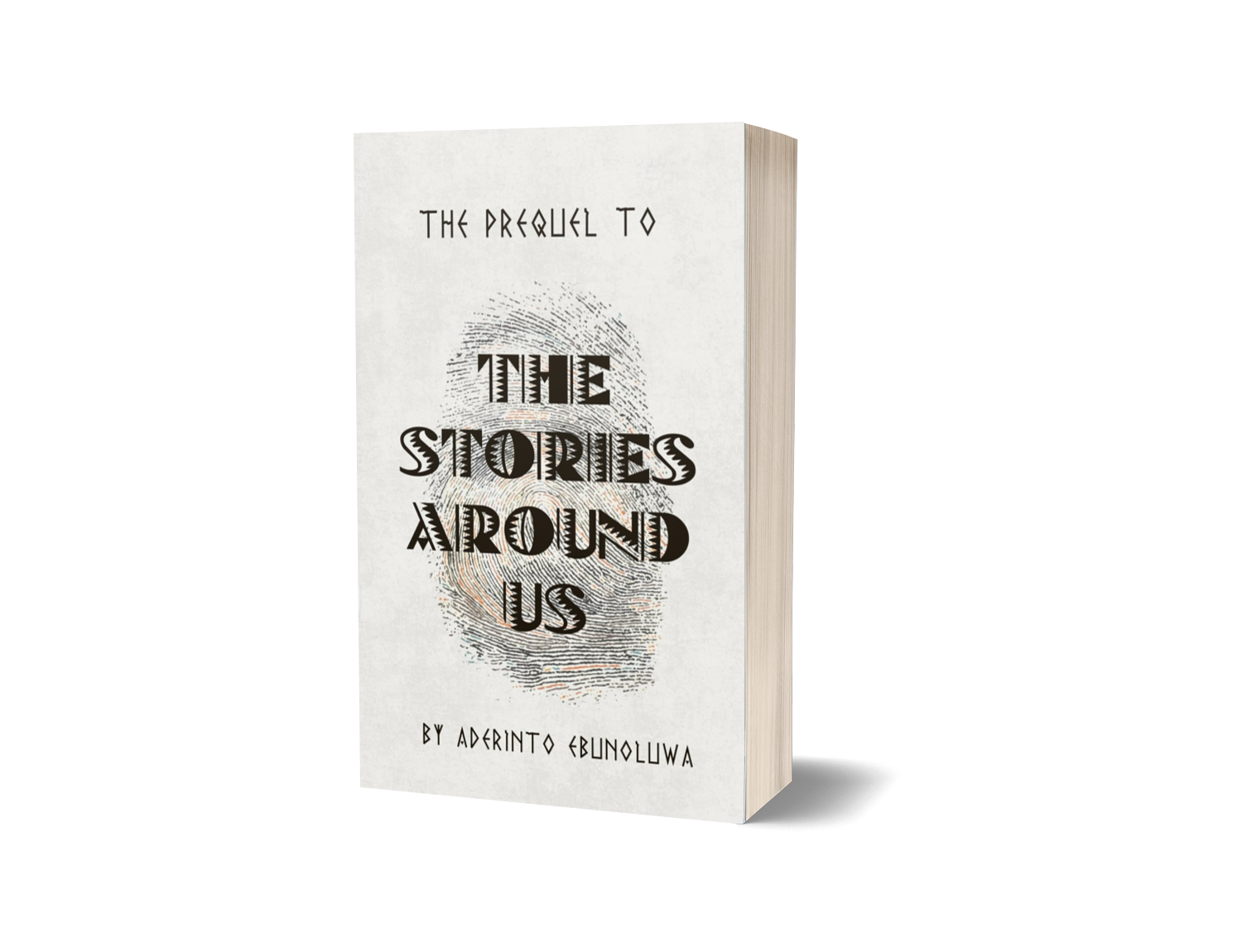
Read The Prequel To My Debut Novel-

More fiction stories on the way…
READ NEXT-

Fiction or not, this one leaves a heavy feeling. The idea that some words can't be taken back once they leave you is what stayed with me. What a powerful piece.
The first